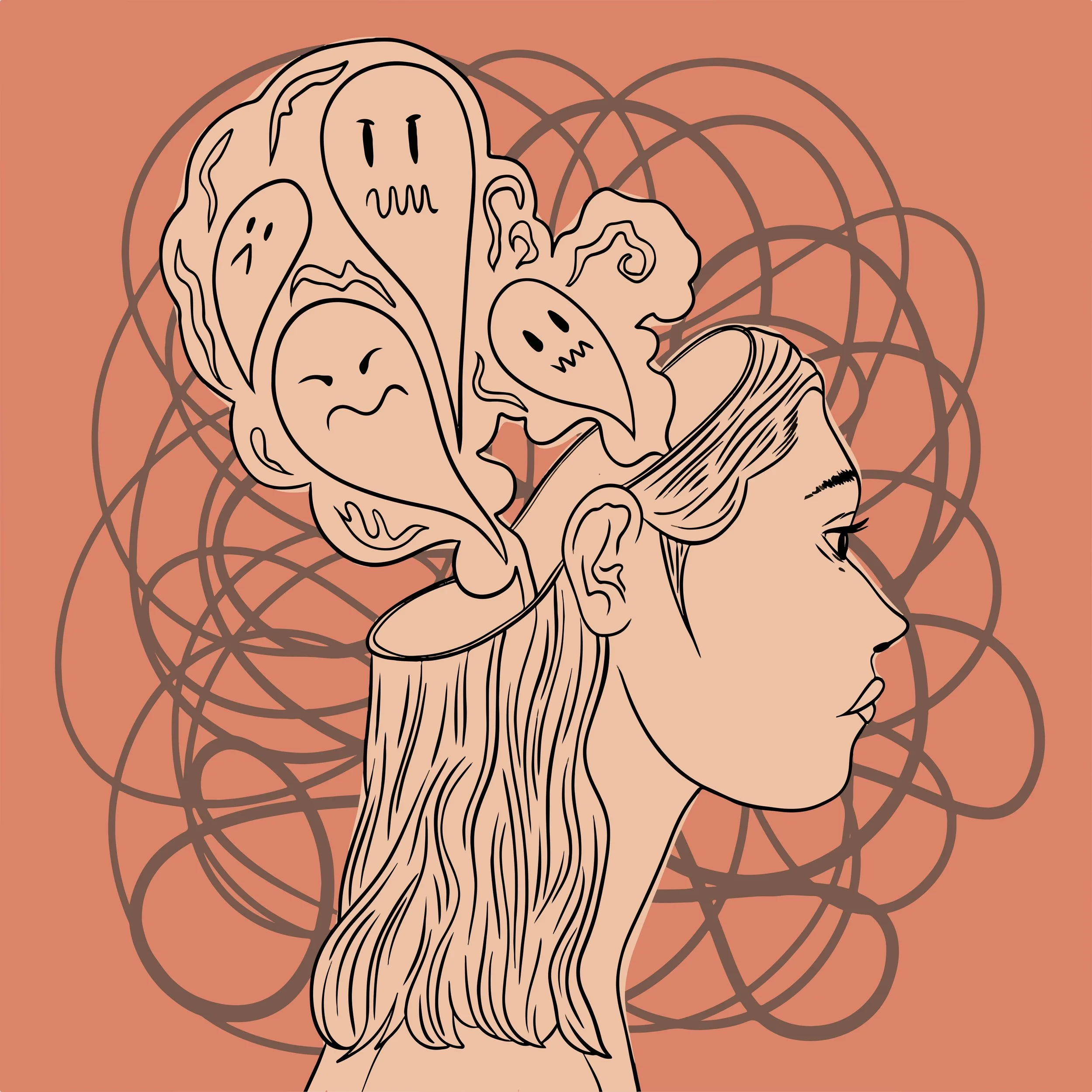
If overthinking was a sport, you’re pretty sure you’d win a gold medal. You notice a fear or concern and then you think about it from every possible angle. You are good at leaving no stone unturned.
You’ve replayed the conversation. You’ve asked someone you trust what they think. Maybe you Googled it or turned to ChatGPT. Maybe you went back through old texts just to make sure. You finally felt a little better...and then your brain came up with one more question.
But what if? Did I sound weird? Did I forget something? Can I really trust myself?
Overthinking often happens with anxiety, perfectionism, and trauma. However, sometimes what looks like “really bad overthinking” is actually part of an obsessive-compulsive cycle. The distinction between overthinking and OCD is incredibly important.
Counterintuitively, if your overthinking is functioning as a compulsion, trying harder to solve the fear, analyze the unruly thought, reassure yourself, or finally reach certainty can actually keep you stuck in the OCD loop.
What’s the Difference Between Anxiety and OCD?
Anxiety and OCD can look surprisingly similar. Both can involve worry, doubt, physical anxiety, avoidance, and feeling unable to get something out of your head. One important difference is what happens after the doubt shows up.
With OCD, an intrusive thought, image, feeling, sensation, or doubt causes distress. You then feel driven to do something to reduce that distress or make sure the feared outcome doesn’t happen. That “something” is a compulsion or safety behavior.
Compulsions aren't always obvious behaviors like checking a lock or washing your hands. They can also happen entirely inside your head. The International OCD Foundation identifies mental review, reassurance seeking, avoidance, and other mental acts as possible compulsions. (Link to International OCD Foundation) That means OCD can sometimes look a whole lot like...thinking.

Hi, I’m Amanda Parmley, MA, LCMHC, LPCC
I’m Amanda Parmley, MA, LCMHC, LPCC a licensed therapist offering online counseling across North Carolina, Kentucky, Florida, and South Carolina. I specialize in anxiety, trauma recovery, perfectionism, and insomnia using evidence-based tools like ERP, EMDR, CBT-I and mindfulness.
Ready to start counseling? Click the button below to get started in therapy with me:
When Does Overthinking Become a Compulsion?
Here’s where things get tricky. Thinking about something repeatedly doesn't automatically mean you have OCD. And you can't determine whether something is a compulsion based solely on what you're thinking about.
It’s the function of the thinking matters.
Ask yourself what you're trying to accomplish by continuing to think about it. Are you trying to understand something important? Or does it feel like you have to figure it out so you can finally feel okay?
Compulsive overthinking often sounds like:
“I just need to know for sure.”
“Let me go through it one more time.”
“What if I missed something?”
“I know they said everything is fine, but what if they were just being nice?”
“What does it mean that I even had that thought?”
“I need to remember exactly what happened.”
“What if I'm actually a bad person?”
“How can I be 100% sure?”
You may even recognize that you've already answered the question. The problem is that the answer doesn't feel certain enough, which prompts you to go back in.
The Overthinking and OCD Cycle
The OCD-overthinking cycle can feel like a full-on investigation at times. Unfortunately, instead of closing the case by reaching a conclusion, the overthinking and investigating leads to more questions. The cycle often looks something like this:
Intrusive thought or doubt → anxiety → analyzing/checking/reassurance → temporary relief → another doubt
The temporary relief you feel after analyzing, checking or seeking reassurance is important and overtimes reinforces the ongoing need to engage in these types of safety behaviors. While, reviewing the situation or getting reassurance makes you feel better, your brain learns that the compulsion helped keep you safe. The next time uncertainty appears, you feel even more compelled to do it again. This is one of the basic mechanisms that maintains the OCD cycle. International OCD Foundation
So you may spend a chunk of time trying to solve a question that feels exceptionally important or scary... then feel better for a short period of time...and then think: Okay, but what about THIS?
Mental Compulsions Can Be Easy to Miss
Many adults with OCD don't recognize themselves in stereotypical descriptions of the disorder.
Maybe you aren't checking the stove fifteen times.
Maybe you don't have contamination fears.
Maybe everything is happening internally.
Mental compulsions can include repeatedly:
replaying conversations
reviewing your memories
analyzing why you had a particular thought
checking how you feel
comparing your reaction to other people's reactions
rehearsing future conversations
mentally arguing against an intrusive thought
trying to prove something to yourself
testing whether you still feel anxious about something
Rumination and mental review can function as compulsions even though nobody else can see them. International OCD Foundation From the outside, you might look completely fine. Meanwhile internally, you can completely caught in a mental spiral.
Reassurance Seeking Can Be a Compulsion, Too
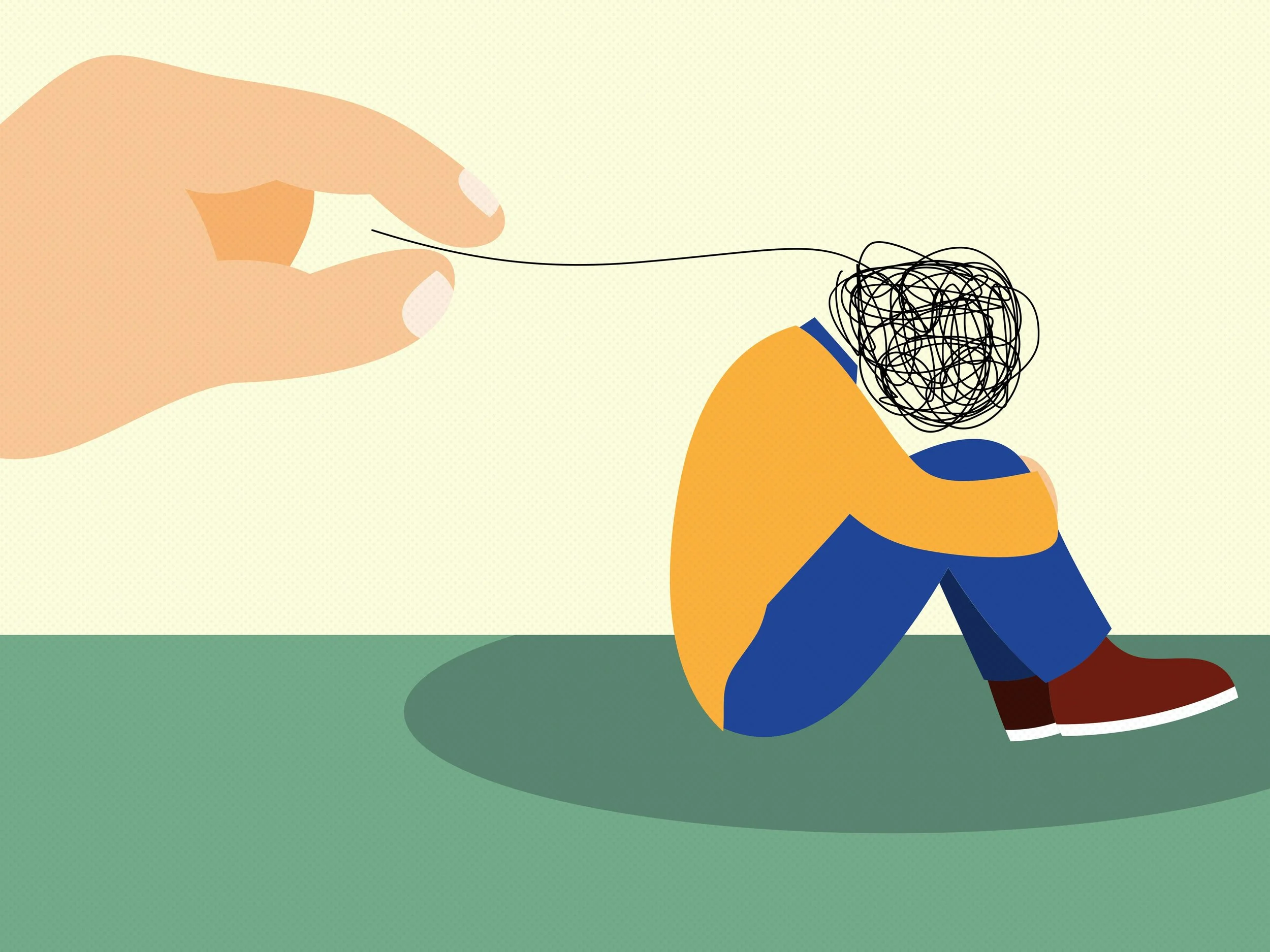
Reassurance seeking can easily fly under the radar, partially because asking for reassurance sometimes is normal and healthy. However, the difference isn't simply whether you ask someone for their opinion. It's what the reassurance is doing for you.
Maybe you ask your partner:
“Are you sure you're not mad at me?”
They tell you they're not.
You feel better.
Then you notice their tone.
“Okay, but you seem quiet. Did I do something?”
They reassure you again.
Relief.
Then your brain says:
But what if they're just saying that because they don't want to talk about it?
Suddenly, you need reassurance about the reassurance. In OCD, reassurance can provide short-term relief while strengthening the longer-term cycle of doubt and reassurance seeking. (Link to International OCD Foundation)
Unfortunately, reassurance doesn't have to come from another person. It might mean repeatedly Googling symptoms. Searching Reddit. Rereading old messages. Checking social media. Taking another online quiz. Or asking AI the same underlying question five slightly different ways, hoping one answer will finally make you feel certain.
“But My Worry Is About Something That Could Actually Happen”
This is one of the reasons OCD can be so convincing. OCD doesn't necessarily give you fears that are impossible.
What if your partner leaves?
What if you say the wrong thing and offend someone?
What if you make the wrong decision?
What if you develop an illness?
What if you aren't actually good at your job?
Since we can't eliminate every one of those possibilities, OCD can keep you in a loop searching for the answer. When in reality there may not be a solid answer. It wants certainty in situations where certainty isn't available.
The goal of OCD treatment isn't to prove that your feared outcome will never happen. It's to change your relationship with uncertainty so you don't have to organize your life around eliminating it.
Is It OCD or Just Overthinking?
There isn't a single trick you can use to diagnose yourself from a blog post. But there are some useful questions to consider.
When you get stuck on something:
Are you looking for new information or trying to get rid of uncertainty?
Does finding an answer actually resolve the issue or does your brain eventually find a loophole?
Do you repeatedly revisit questions you've already answered?
Do you feel an urgent need to figure something out before you can move on?
Does reassurance help briefly but never seem to last?
Are you spending significant time mentally reviewing, checking, researching, or analyzing?
Those patterns don't automatically mean you have OCD, but they are worth paying attention to, particularly if the cycle is taking up substantial time, creating distress, interfering with relationships, or changing the way you live your life.
Why Regular Anxiety Strategies Can Sometimes Backfire With OCD
This is one reason correctly identifying OCD matters. Some strategies that sound perfectly reasonable for anxiety can accidentally turn into compulsions when they're being used to achieve certainty.
For example:
Thought: “What if I said something offensive?”
If you respond by repeatedly listing all the reasons you're probably a good person, your brain may feel better temporarily. But if you have to perform that exercise every time the doubt appears, you've created another way of reassuring yourself.
Even cognitive restructuring can become part of a reassurance ritual in OCD when it's repeatedly used to prove that an obsession isn't true. The International OCD Foundation specifically cautions that traditional thought-challenging techniques can become reassurance-seeking strategies when treating OCD. Link to International OCD Foundation
This doesn't mean cognitive strategies are inherently bad. It means treatment has to address the cycle that's actually happening.
How ERP Therapy Helps With OCD and Compulsive Overthinking
Exposure and Response Prevention, or ERP, is a first-line behavioral treatment for OCD. Despite the name, ERP isn't simply about forcing yourself to do terrifying things.
Treatment is typically gradual and collaborative. The “exposure” part involves intentionally allowing yourself to encounter uncertainty, intrusive thoughts, feelings, or situations that trigger the OCD cycle. The “response prevention” part involves practicing a different response instead of performing the usual compulsion.
So if your OCD says: “Figure this out right now.” ERP might involve learning to notice that urge without immediately beginning the investigation. If OCD says: “Ask them one more time just to make sure.” You practice tolerating the discomfort of not asking. If OCD says: “Replay the conversation until you're sure you didn't say anything wrong.”
You work on allowing the uncertainty to exist without completing the mental review. The goal isn't to convince yourself that everything is definitely fine. It's learning: I don't have to know for sure in order to move forward.
What Happens When You Stop Trying to Get Certainty?
Initially? You may feel more anxious. That's part of what makes compulsions so difficult to resist. They work remarkably well at providing short-term relief. Unfortunately, short-term relief isn't the same thing as long-term freedom. ERP helps you practice experiencing uncertainty without automatically responding to it with checking, reassurance, avoidance, or mental review.
Over time, the question changes. Instead of: “How do I make absolutely sure this isn't true?” you begin practicing:“Can I live my life without answering this question right now?” This can be a major shift for someone who has spent years trying to think their way out of anxiety.
Online OCD and ERP Therapy in Kentucky, North Carolina, and Florida
If you've always described yourself as an overthinker but are starting to wonder whether something more is happening, it may be worth looking at the pattern underneath the thinking. I provide online therapy for adults experiencing OCD, anxiety, perfectionism, intrusive thoughts, reassurance seeking, and compulsive overthinking in North Carolina, Kentucky, and Florida.
My approach includes Exposure and Response Prevention (ERP) for OCD, along with other evidence-based and trauma-informed approaches when appropriate.
I offer online therapy for adults throughout Kentucky, North Carolina and Florida, including clients in Louisville, Lexington, La Grange, Charlotte, Raleigh, Wilmington, and other communities across all three states.
If you're looking for a therapist familiar with OCD, perfectionism and overthinking in Kentucky, North Carolina, or Florida, you can schedule a free 15-minute connection call to see whether we're a good fit.

How to Start Therapy with Amanda Parmley, MA, LCMHC, LPCC:
1. Click the button below to request a free 15-minute consultation.
2. Complete
the required screener
& take the phone call from Amanda Parmley at the prearranged & agreed-upon time.
3. Start your journey
to feeling better.
Amanda Parmley, MA, LCMHC, LPCC also offers counseling for:
Anxiety and OCD
Trauma and PTSD
Perfectionism and overthinking
Insomnia